What Are the Fastest-Growing Technology Careers? 10 Fields Students Should Know

Jeremiah Thooyavan
October 5, 2026
Discover 10 of the fastest-growing technology career fields, from AI and cybersecurity to semiconductors, FinTech, robotics and green technology, with global and Malaysian job growth data.

Technology careers go far beyond software development. AI, cybersecurity, semiconductors, data science, cloud infrastructure, robotics, FinTech, green technology and digital healthcare are all growing fields.
AI is driving growth across multiple technology fields. AI needs data, computing infrastructure, semiconductors, software and cybersecurity, creating demand across interconnected industries.
Malaysia is investing heavily in future technology industries. Digital investments, the National Semiconductor Strategy and data-centre development are creating industrial capacity and potential demand for highly skilled workers.
What Are the Fastest-Growing Technology Careers? 10 Fields Students Should Know
For many students, a “technology career” might still mean becoming a software developer.
But the technology job market has become much broader.
Artificial intelligence needs engineers and data specialists. AI systems need semiconductors and cloud infrastructure. Digital banks need technology professionals who understand financial systems. Hospitals increasingly rely on digital health and data. Meanwhile, the shift towards renewable energy is creating new demand for engineers working with batteries, electric vehicles and energy systems.
The global employment outlook reflects this shift. The World Economic Forum's Future of Jobs Report 2025 estimates that 170 million jobs could be created globally by 2030, while 92 million could be displaced, resulting in a net increase of 78 million jobs. Technology-related roles, including Big Data Specialists, FinTech Engineers, AI and Machine Learning Specialists, and Software and Application Developers, are among the fastest-growing occupations by percentage.
For Malaysian students, these changes are not happening somewhere else. Malaysia is also investing heavily in many of the industries behind this growth.
Here are 10 technology career fields worth knowing about.
1. Artificial Intelligence Careers
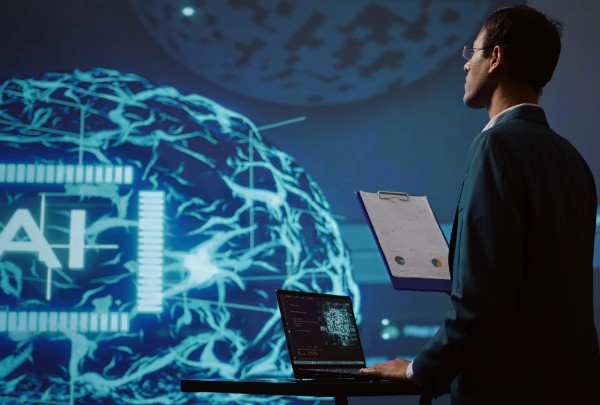
Artificial intelligence has moved from a specialist area of computer science into a technology being adopted across businesses and industries.
The World Economic Forum identifies AI and Machine Learning Specialists as one of the fastest-growing job categories globally through 2030. It also found that 86% of surveyed employers expect AI and information-processing technologies to transform their businesses by 2030.
Job postings provide another indication of demand. Stanford University's AI Index 2026 found that AI-related skills appeared in 4.69% of all job postings in Singapore in 2025, 3.48% in Hong Kong, 3.00% in Canada and 2.56% in the US. The proportion of postings requiring AI skills has generally increased across the countries tracked.
What about Malaysia?
Malaysia has set an ambition to become an AI Nation by 2030. In Q3 2025, Malaysia recorded RM54.13 billion in approved Malaysia Digital investments, generating 21,815 high-value jobs across 402 digital companies.
AI-related investments alone accounted for 8,328 projected jobs, representing 38% of total projected employment from those investments. MDEC specifically identified demand for digital professionals, data scientists, AI engineers and specialised service talent.
Careers in this field include:
- AI Engineer
- Machine Learning Engineer
- AI Research Scientist
- Computer Vision Engineer
- Natural Language Processing Engineer
- AI Solutions Architect
Why it is growing: AI is increasingly being used to automate processes, analyse information, develop products and support decision-making across industries.
2. Cybersecurity Careers

The more dependent businesses become on digital systems, the more important it becomes to protect those systems.
Cybersecurity covers networks, applications, cloud infrastructure, financial systems, personal information and other digital assets.
The global cybersecurity workforce was estimated at 5.47 million professionals in 2024 by ISC2. However, the organisation estimated a workforce gap of approximately 4.76 million people — the difference between the cybersecurity workforce organisations need and the professionals available. ISC2 stresses that this is a workforce-gap estimate, not 4.76 million advertised vacancies.
There is also strong occupational growth in the US. The Bureau of Labor Statistics projects Information Security Analyst employment to increase by 28.5% between 2024 and 2034, adding approximately 52,100 jobs.
What about Malaysia?
Malaysia's growing digital economy is increasing the importance of cybersecurity. The Cyber Security Act 2024 also established stronger requirements for organisations operating Malaysia's National Critical Information Infrastructure, covering areas including government, banking and finance, transport, defence and digital infrastructure.
As more Malaysian businesses adopt cloud services, digital payments, AI and connected systems, protecting those systems becomes part of operating the digital economy.
Careers in this field include:
- Cybersecurity Analyst
- Security Engineer
- Ethical Hacker
- Penetration Tester
- Security Architect
- Digital Forensics Analyst
- Security Operations Specialist
Why it is growing: More digital infrastructure means more systems, data and networks that need to be secured.
3. Semiconductor Careers

AI may be the technology everyone is talking about, but AI still needs something physical to run on: semiconductors.
Chips are found in AI systems, smartphones, electric vehicles, data centres, medical devices and industrial equipment.
The global semiconductor industry is expected to need more than one million additional skilled workers by 2030. SEMI also estimates that the industry already faces significant shortages of engineers, including more than 200,000 engineers in the Asia-Pacific region.
Global semiconductor sales reached US$627.6 billion in 2024, a 19.1% increase, with AI, consumer electronics, 5G and automotive technologies contributing to demand.
What about Malaysia?
Semiconductors are particularly important because Malaysia already has an established role in the global electronics supply chain.
Malaysia's National Semiconductor Strategy (NSS) aims to attract RM500 billion in investment, train and upskill 60,000 highly skilled Malaysian engineers, and provide at least RM25 billion in fiscal support for the strategy.
The strategy also aims to move Malaysia further into higher-value areas such as IC design, advanced packaging, R&D and advanced manufacturing equipment rather than remaining concentrated in lower-value activities.
For more information see how much engineers earn in Malaysia.
Careers in this field include:
- Semiconductor Engineer
- IC Design Engineer
- Process Engineer
- Semiconductor Equipment Engineer
- Test Engineer
- Materials Engineer
- Manufacturing Engineer
Why it is growing: The expansion of AI, electronics, electric vehicles and advanced computing is increasing demand for chips — and for the people who design, manufacture and test them.
4. Data Science Careers

Every digital service generates data. The challenge is turning that data into useful information.
Data scientists analyse large datasets to identify patterns, make predictions and support decisions.
The US Bureau of Labor Statistics projects Data Scientist employment to grow by 33.5% between 2024 and 2034, adding approximately 82,500 jobs.
The global picture is also strong. The World Economic Forum identifies Big Data Specialists as being in high demand through 2030.
What about Malaysia?
Malaysia's digital investment pipeline is also generating demand for knowledge workers.
MDEC reported RM42.58 billion in Malaysia Digital investment commitments as of June 2025, with the potential to generate 17,495 knowledge workers over five years. Data scientists are among the roles being sought alongside AI engineers and other digital professionals.
Careers in this field include:
- Data Scientist
- Data Analyst
- Data Engineer
- Business Intelligence Analyst
- Data Architect
- Quantitative Analyst
Why it is growing: AI, digital businesses and data-driven decision-making all depend on the ability to collect, process and interpret information.
5. Cloud & Infrastructure Careers

You may never see the infrastructure behind an app, website or AI tool, but someone has to build and maintain it.
Cloud and infrastructure professionals work behind the scenes to keep digital services running, scalable and reliable.
In the US, employment in computing infrastructure providers,data processing and web hosting is projected to grow by 20.3% between 2024 and 2034, adding approximately 97,900 jobs.
Cloud-native technology is also spreading rapidly. CNCF and SlashData estimated that the global cloud-native developer community had reached 19.9 million developers in Q1 2026, up 28% from 15.6 million in Q3 2025.
What about Malaysia?
Malaysia has become a major destination for data-centre and cloud investment.
MIDA reports that Malaysia recorded RM385.7 billion in data-centre-related investments between 2021 and the first half of 2026.
A previous MIDA estimate also projected that Google's data-centre investment and related projects could contribute to more than 64,000 high-value jobs locally, although this figure represents the wider economic and investment impact rather than direct data-centre employment alone.
Careers in this field include:
- Cloud Engineer
- Cloud Architect
- DevOps Engineer
- Site Reliability Engineer
- Network Engineer
- Infrastructure Engineer
- Platform Engineer
Why it is growing: AI, cloud computing and digital services all require increasingly powerful and reliable infrastructure.
6. AI + Software Engineering

AI does not exist separately from software.
Software engineers are increasingly responsible for turning AI capabilities into applications, platforms and products that people can actually use.
The World Economic Forum lists Software and Application Developers as one of the highest-demand careers. In the US, software developer employment is projected to increase by 15.8% between 2024 and 2034, adding around 267,700 jobs.
What about Malaysia?
Malaysia's digital economy is already generating substantial employment.
In 2024, approved investments in Malaysia's digital industry reached RM133.3 billion across 1,015 projects, with 48,650 employment opportunities recorded.
As more Malaysian companies develop digital products and adopt AI, the demand extends beyond people who build AI models. Companies also need professionals who can integrate those technologies into software and business applications.
Careers in this field include:
- Software Engineer
- AI Software Engineer
- Full-Stack Developer
- Backend Engineer
- AI Application Developer
- Product Engineer
- Software Architect
Why it is growing: AI creates new software applications while existing businesses continue to digitise their products and services.
7. Robotics & Automation Careers
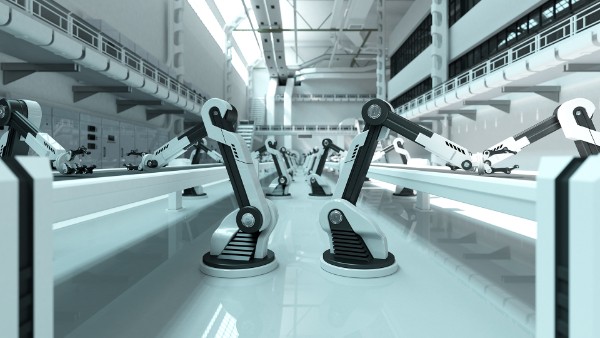
What happens when technology leaves the screen and starts controlling the physical world?
That's where robotics and automation come in.
The International Federation of Robotics recorded 542,000 industrial robots installed worldwide in 2024. That was more than double the 221,000 units installed 10 years earlier. The number of industrial robots in operation reached approximately 4.66 million, up 8.9% from the previous year.
The World Economic Forum also identifies robots and autonomous systems as major technologies expected to transform businesses through 2030.
What about Malaysia?
Malaysia is pushing its manufacturing sector towards smart factories.
Under the New Industrial Master Plan, the government has set a target of 3,000 smart factories by 2030. These factories are expected to use technologies such as AI, Internet of Things, robotics, automation and data systems.
Malaysia's robotics market has also been projected by MOSTI to reach RM103.1 billion by 2030, although this is a market-size projection rather than a jobs forecast.
Careers in this field include:
- Robotics Engineer
- Automation Engineer
- Controls Engineer
- Mechatronics Engineer
- Autonomous Systems Engineer
- Industrial Automation Engineer
- Robotics Technician
Why it is growing: Manufacturers are increasingly using machines, sensors, software and robotics to automate production and make factories more data-driven.
8. FinTech Careers

What happens when finance becomes increasingly digital?
FinTech.
According to the World Economic Forum, by 2030 FinTech Engineers will have high volume of occupation.
FinTech covers far more than mobile banking. It includes digital payments, online banking, financial data, fraud detection, digital assets, financial technology infrastructure and technology-enabled risk management.
What about Malaysia?
Malaysia's financial sector is already highly digitalised.
Bank Negara Malaysia reported that e-payment transactions grew 25% to 18.4 billion in 2025. The number of active mobile banking users also increased 8.7% to 25 million.
Malaysia's digital banking ecosystem is expanding too, with all five licensed digital banks having commenced operations by the end of 2025.
This creates demand for technology across banking, payments, cybersecurity, data, fraud prevention and financial infrastructure.
Careers in this field include:
- FinTech Engineer
- Financial Data Scientist
- Quantitative Developer
- Blockchain Developer
- Digital Banking Specialist
- Risk Technology Specialist
- Financial Technology Analyst
Why it is growing: Financial services are becoming increasingly dependent on software, data and digital infrastructure.
9. Green Technology Careers

Technology isn't only changing computers and digital services.
It is also changing how the world produces, stores and uses energy.
The International Renewable Energy Agency and International Labor Organization says at least 16.6 million people worldwide had jobs in renewable energy in 2024. As global renewable capacity continued to grow, so did the sector’s employment.
What about Malaysia?
Malaysia's Green Investment Strategy focuses on areas including:
- Renewable energy
- Energy efficiency
- Hydrogen
- Bioenergy
- Green mobility
- Carbon capture
- Circular economy
In 2024, Malaysia approved RM3.7 billion in renewable-energy investments across 823 projects, expected to create 440 jobs.
Battery and energy-storage manufacturing is another area to watch. EVE Energy's Phase 2 expansion in Kedah is expected to create more than 1,000 jobs as the company expands its energy-storage manufacturing capabilities and local supply chain.
Careers in this field include:
- Renewable Energy Engineer
- Battery Engineer
- EV Engineer
- Environmental Engineer
- Energy Systems Engineer
- Sustainability Technology Specialist
Why it is growing: The transition towards renewable energy, electric vehicles and energy storage requires new technology, infrastructure and technical expertise.
10. Digital Healthcare Careers

Healthcare is becoming a data and technology industry as well as a clinical one.
Digital healthcare includes electronic health records, telemedicine, healthcare analytics, remote monitoring, AI-assisted systems and connected medical devices.
The World Health Organization's 2026 analysis of digital-health competency frameworks identifies common areas including data, informatics, technical proficiency, communication and digital professionalism, reflecting the growing role of digital technologies in health systems.
The US Bureau of Labor Statistics projects employment of Health Information Technologists and Medical Registrars to grow 16% between 2025 and 2035, adding approximately 6,700 jobs. The BLS attributes this partly to the growing volume of electronic health information and demand for professionals who can analyse it.
What about Malaysia?
Malaysia's medical-device industry is moving into increasingly sophisticated technologies.
In 2025, MIDA approved RM4 billion in medical-device investments across 46 projects, which are expected to create 3,393 employment opportunities. The industry now includes advanced diagnostic systems, high-precision devices and technologies with sensors and Internet of Things applications.
Careers in this field include:
- Health Informatics Specialist
- Biomedical Engineer
- Healthcare Data Scientist
- Clinical Data Analyst
- Digital Health Specialist
- Medical AI Specialist
- Biomedical Data Scientist
Why it is growing: Healthcare systems are generating more digital information while medical devices and services increasingly incorporate software, data and connected technologies.
What Do These 10 Technology Career Fields Have in Common?
AI, semiconductors, cybersecurity, FinTech, and healthcare might seem like completely different industries. But they are increasingly connected.
- AI needs data.
- AI needs chips.
- AI and software need cloud infrastructure.
- Cloud systems need cybersecurity.
- Software turns technology into products.
- Robotics takes software into the physical world.
And technologies developed in these fields are increasingly being applied to finance, healthcare, manufacturing and energy. This is why it is becoming difficult to define technology as one industry.
Technology is increasingly becoming the infrastructure underneath other industries.
What Does This Mean for Students in Malaysia?
The biggest takeaway is that technology careers are becoming much broader than software development.
A student interested in technology could eventually find opportunities in AI, data, cybersecurity, semiconductor manufacturing, cloud infrastructure, robotics, financial services, renewable energy or healthcare technology.
And Malaysia is investing in many of these areas.
The country's digital industry alone recorded RM133.3 billion in approved investments in 2024, with 48,650 employment opportunities, while the semiconductor strategy is targeting RM500 billion in investment and 60,000 highly skilled engineers. Data-centre-related investment reached RM385.7 billion between 2021 and the first half of 2026.
These numbers do not mean every investment will translate directly into a job for a school leaver. They do, however, show where Malaysia is directing capital and building industrial capacity.
Students should pay attention to that.
Technology Careers Are Still Changing
The 10 fields above largely describe established or rapidly expanding career areas.
But technology is also creating roles that would have sounded unfamiliar to many students a decade ago.
AI governance, AI safety, human-AI interaction and other emerging areas are beginning to create new responsibilities around technologies that are still evolving.
Frequently Asked Questions
What are the fastest-growing technology careers?
Technology-related career fields showing strong global growth include artificial intelligence, data science and big data, cybersecurity, software development, FinTech, semiconductors, cloud infrastructure, robotics and automation, green technology and digital healthcare. The World Economic Forum identifies Big Data Specialists, FinTech Engineers, AI and Machine Learning Specialists and Software and Application Developers among the fastest-growing occupations globally through 2030.
Is artificial intelligence the fastest-growing technology career?
AI and Machine Learning Specialists are among the fastest-growing occupations globally, according to the World Economic Forum. AI is also a broad career field covering roles such as AI engineers, machine learning engineers, AI researchers and computer vision specialists.
Which technology careers are growing in Malaysia?
Malaysia is seeing significant investment and employment activity across AI, semiconductors, cloud infrastructure, software, smart manufacturing, FinTech, green technology and digital healthcare. The scale of investment varies considerably between sectors, so there is no single ranking of Malaysian technology careers by job growth.
Are semiconductor careers growing in Malaysia?
Yes. Malaysia's National Semiconductor Strategy targets RM500 billion in investment, 60,000 highly skilled Malaysian engineers and at least RM25 billion in fiscal support as Malaysia moves further into higher-value semiconductor activities.
Is cybersecurity a growing career in Malaysia?
Cybersecurity is becoming increasingly important as Malaysia's economy becomes more digital. The Cyber Security Act 2024 also introduced stronger requirements for organisations operating National Critical Information Infrastructure, increasing the importance of cybersecurity capabilities.
Are technology careers only about software development?
No. Technology careers now span AI, data, cybersecurity, semiconductors, cloud infrastructure, robotics, financial technology, renewable energy and healthcare technology. Many of these fields require people working in engineering, research, data, infrastructure and industry-specific technology roles.
Which technology fields are being driven by AI?
AI directly creates demand for AI and machine learning specialists, but its growth also affects data science, cloud infrastructure, semiconductor technology, cybersecurity and software engineering. AI systems need data, computing power, chips, secure infrastructure and software applications.
Are green technology careers considered technology careers?
Yes. Green technology includes renewable energy, electric vehicles, batteries, energy storage, smart-grid systems and other technologies supporting the energy transition. Renewable energy alone employed at least 16.6 million people globally in 2024.
Is healthcare becoming a technology career field?
Healthcare remains a clinical sector, but digital technologies are creating a growing layer of technology-related work around healthcare data, digital health, medical devices, health information systems and AI-assisted technologies. WHO identifies data, informatics and technical proficiency among important digital-health competency areas.
Why are technology careers growing so quickly?
Several forces are contributing, including AI adoption, digitalisation, automation, cloud computing, cybersecurity requirements, semiconductor demand, the energy transition and the increasing use of technology across industries. In Malaysia, government strategies and private investment are also supporting growth in areas such as semiconductors, digital infrastructure, smart manufacturing, renewable energy and healthcare technology.


Students
© 2009 - 2026 TIMES MEDIA SDN. BHD. (955976-P). All Rights Reserved.