Can Your PTPTN Loan Become a Scholarship? BAeK PTPTN Explained

Jeremiah Thooyavan
September 17, 2026
If your household is registered under eKasih, your PTPTN financing may be converted into a scholarship through Biasiswa Anak eKasih PTPTN (BAeK PTPTN).
The scheme is aimed at students from poor income households who meet PTPTN’s eligibility requirements. Instead of repaying the financing like a normal PTPTN loan, eligible students receive the funding in the form of a scholarship.
Here is what you need to know.
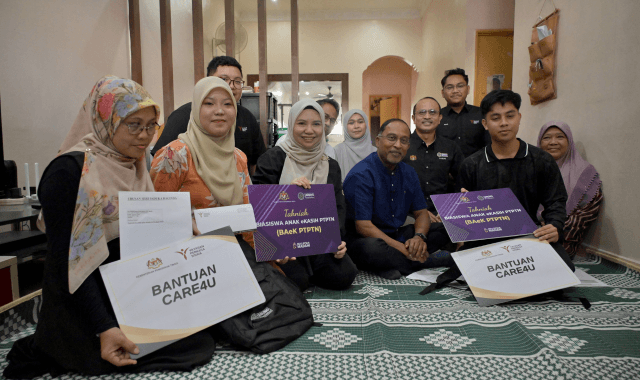
Loan-to-Scholarship Conversion via eKasih
Under the Budget 2026 initiative, students from poor households registered in the eKasih database can have their PTPTN financing converted into a full scholarship (BAeK PTPTN), removing the usual repayment burden.
Eligibility Depends on the PTPTN Approval Date, Not Enrolment Date
To qualify, your PTPTN loan must have been approved from January 1, 2026 onwards (even if you started university in 2025). Additional criteria include studying full-time for a Diploma or Bachelor's Degree at a public institution, being 25 or below, and having an active Simpan SSPN account.
No Separate Application Required; Process is Automatic
Students do not need to apply for BAeK separately. Once your PTPTN loan is approved, PTPTN automatically checks your eligibility. If selected, you simply accept the offer, sign an amendment notice (Notis Pindaan), and submit the documents to a PTPTN branch within 60 days.
1. What Is BAeK PTPTN?
BAeK PTPTN is a government initiative introduced under Budget 2026 to help eligible students from eKasih households continue their studies without taking on the usual PTPTN repayment burden.
Students do not apply for BAeK as a separate scholarship from the start. They must first have PTPTN financing approved. PTPTN then checks whether the student meets the BAeK eligibility requirements.
2. Who Qualifies for BAeK PTPTN?
Students must meet the current eligibility requirements:
- A Malaysian citizen
- Aged 25 or below when applying
- Registered in the eKasih database
- Studying full-time for a Diploma or Bachelor's Degree at a public higher education institution
- Studying a programme registered with PTPTN
- Have PTPTN financing approved from 1 January 2026 onwards
- Have at least one semester of study remaining
- Have an active Simpan SSPN Prime or Simpan SSPN Plus account
- Not have a PTPTN account being managed by an Agensi Perunding Hutang (APH)
Being registered under eKasih alone does not automatically guarantee the scholarship. Students must meet the other BAeK requirements as well.
3. Can Existing PTPTN Borrowers Qualify?
Yes. Already having PTPTN financing does not automatically make you ineligible for BAeK.
What matters is whether the financing you hold meets the scheme’s requirements. In particular, the relevant PTPTN financing must have been approved from 1 January 2026 onwards.
Students whose PTPTN accounts are currently being managed by an APH are not eligible.
4. Does It Matter When You Started University?
Not necessarily.
A common misunderstanding is that anyone who started university before 2026 cannot qualify. In fact, the more important date is when your PTPTN financing was approved.
This means a student who began studying in 2025 may still qualify if the PTPTN financing was approved from 1 January 2026 onwards and they meet the other conditions.
For example:
- Started university in September 2025, PTPTN approved in January 2026: You may qualify.
- Started university in September 2025, PTPTN approved in October 2025: That financing does not meet the BAeK approval-date requirement.
So, when checking your eligibility, look at your PTPTN approval date rather than your university enrolment date.
5. How Much Can You Receive?
The BAeK scholarship amount follows the PTPTN financing amount approved for your programme.
Programme | Annual Amount |
Diploma | RM4,750 |
Bachelor's Degree (Arts) | RM6,180 |
Bachelor's Degree (Science) | RM6,650 |
For example, a four-year science degree could amount to around RM26,600, while a three-year arts degree could total around RM18,540.
The scholarship is not normally paid as one lump sum. Payments are made by semester based on confirmation of the student’s study status and academic results.
6. How Do You Apply for BAeK PTPTN?
If your PTPTN financing has already been approved, you do not need to submit a separate BAeK application form.
PTPTN will assess your eligibility automatically.
If you qualify:
- PTPTN sends a BAeK offer through email and myPTPTN.
- Print and complete the BAeK scholarship documents.
- Sign the Notis Pindaan, which amends your existing PTPTN financing arrangement.
- Submit the completed documents physically at a PTPTN branch.
- The documents must be submitted within 60 days from the date of the BAeK offer letter.
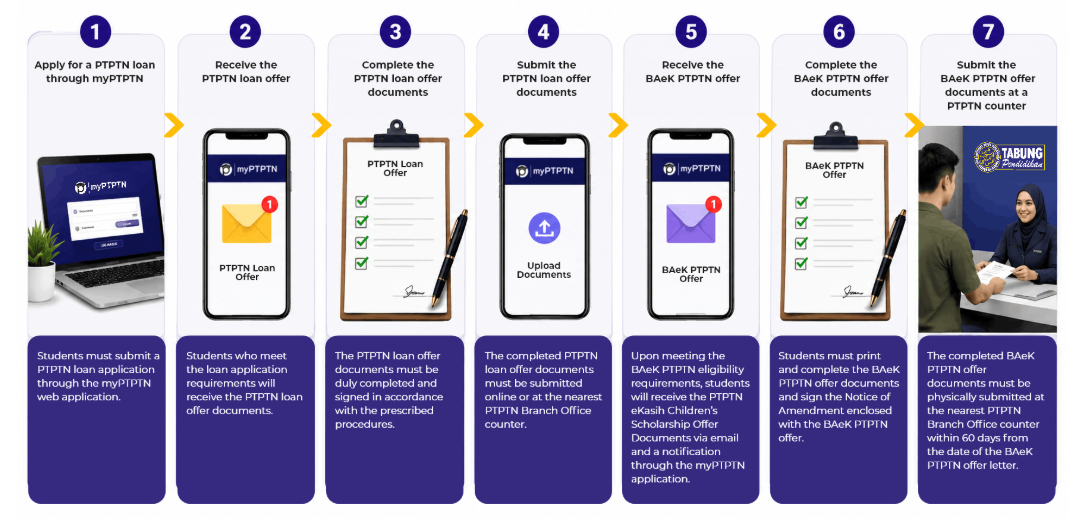
In simple terms: PTPTN approval → BAeK eligibility check → BAeK offer → sign documents → submit within 60 days.
7. What Happens to Your Existing PTPTN Agreement?
You do not need to cancel your existing PTPTN agreement.
Instead, eligible students sign a Notis Pindaan, or amendment notice, together with the BAeK offer. This changes the existing financing arrangement to reflect the scholarship.
8. Do You Need to Repay BAeK PTPTN?
BAeK financing is provided as a scholarship rather than a standard repayable PTPTN loan.
This means successful recipients do not repay the BAeK scholarship in the same way as ordinary PTPTN borrowers, subject to the scheme’s terms and conditions.
9. What If You’re Not Registered With eKasih?
If your household is not yet registered under eKasih, you should complete your eKasih registration first.
Once your household appears in the eKasih database, you may approach PTPTN to appeal for BAeK consideration. However, approval remains subject to the scheme’s requirements and available allocation.


Students
© 2009 - 2026 TIMES MEDIA SDN. BHD. (955976-P). All Rights Reserved.