He Spotted a Coffee Cart at His Sister’s Wedding. At 22, He Now Runs One

Afterschool Team
November 5, 2026
Discover how 22-year-old Danish Imran started Qopi Cart, tested his coffee business at MMU and overcame challenges with support from a university entrepreneurship programme.
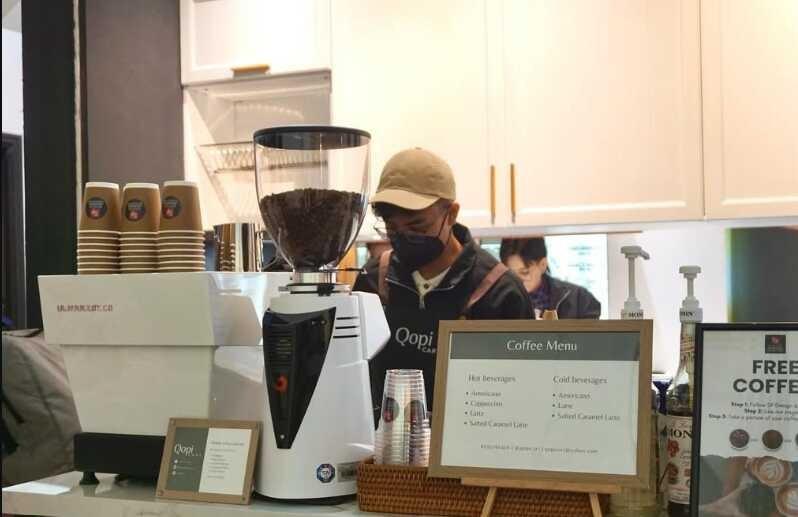
- A simple observation can become a business opportunity. At just 22, Danish Imran Abdul Nasir turned an idea inspired by a coffee cart at his sister's wedding into Qopi Cart, an event coffee catering business.
- University can provide valuable opportunities for students to test business ideas. Through MMU's Entrepreneur Cadetship (eCadet) programme, Danish gained access to a real customer base by selling coffee during convocation, allowing him to test his concept before expanding.
- Starting a business comes with financial uncertainty and setbacks. Danish experienced months with as few as one client and worried about recovering his investment. His experience highlights the importance of perseverance when building a business.
- Students do not need a perfect business plan to start their entrepreneurial journey. Danish's story shows how taking action, learning from mistakes and using university resources can help young entrepreneurs develop their ideas into real businesses.
Danish Imran Abdul Nasir found his business idea at a family wedding. His sister had hired a vendor to make coffee for the guests, and the idea stayed with him.
“I got the idea to run a coffee catering business … during my sister’s wedding,” he says. “They had a vendor there, making coffee.”
Today Danish, 22, runs Qopi Cart, a coffee cart that caters events. He knew the concept wasn’t his invention. “It was actually something not new in the US or UK,” he says, “but it was very new in Malaysia.” So he started researching how coffee carts worked, and how to bring the idea to Malaysian customers.
Testing the idea on campus
Like most first-time founders, Danish needed somewhere to find out whether people would actually buy. He found it at Multimedia University (MMU).
“MMU did help me in many ways when I first started,” he says. Through the Entrepreneur Cadetship programme, known as eCadet, run by MMU’s Entrepreneurship Development Centre (EDC), he was given the chance to set up a booth outside the EDC and sell his coffee during convocation. “That was pretty good,” he says.
eCadet is open to second-year MMU undergraduates. According to the EDC, it offers training in startup skills, industry mentorship and links with startups, companies, agencies and accelerators. For a student with a product but no customers yet, a convocation day offers something just as practical: a ready-made crowd of graduates and families, and a quick answer to whether people will pay.
The month with one client
Not every month went that well. This is the part founder stories often skip.
“There was a moment that I felt and I believed the business wasn’t working,” Danish says. “Sometimes in a month, there’s only one client.”
He had put a lot of money into the business, and that made the quiet months harder. “I was afraid I wasn’t making any returns.”
A catering business only earns when someone books it. A slow month means equipment sitting idle while the money already spent stays spent. For a student, that pressure can feel personal. Danish kept going anyway, and Qopi Cart is still serving coffee today.
Just start
His advice to students with a small business idea is direct: “Just go for it.”
“The best thing you can do is just to start your business rather than just overthink or overplan it,” he says. “Along the way, you will make mistakes obviously, but these mistakes will help you grow the business more.”
It is easy to hear that as a slogan. Danish’s own story gives it more weight. His first real test was not a shop or a big launch but a single booth on convocation day, with a university programme behind him.
That may be the most useful lesson for students. University is one of the few places where you can put an idea in front of real customers, with mentors close by, before the stakes rise. The mistakes still happen. They just happen while you still have support around you.


Students
© 2009 - 2026 TIMES MEDIA SDN. BHD. (955976-P). All Rights Reserved.