How Do You Become an IC Design Engineer in Malaysia?

Jeremiah Thooyavan
November 10, 2026
Learn how to become an IC Design Engineer in Malaysia, including SPM subjects, engineering degrees, technical skills, training programmes, salaries and career opportunities.
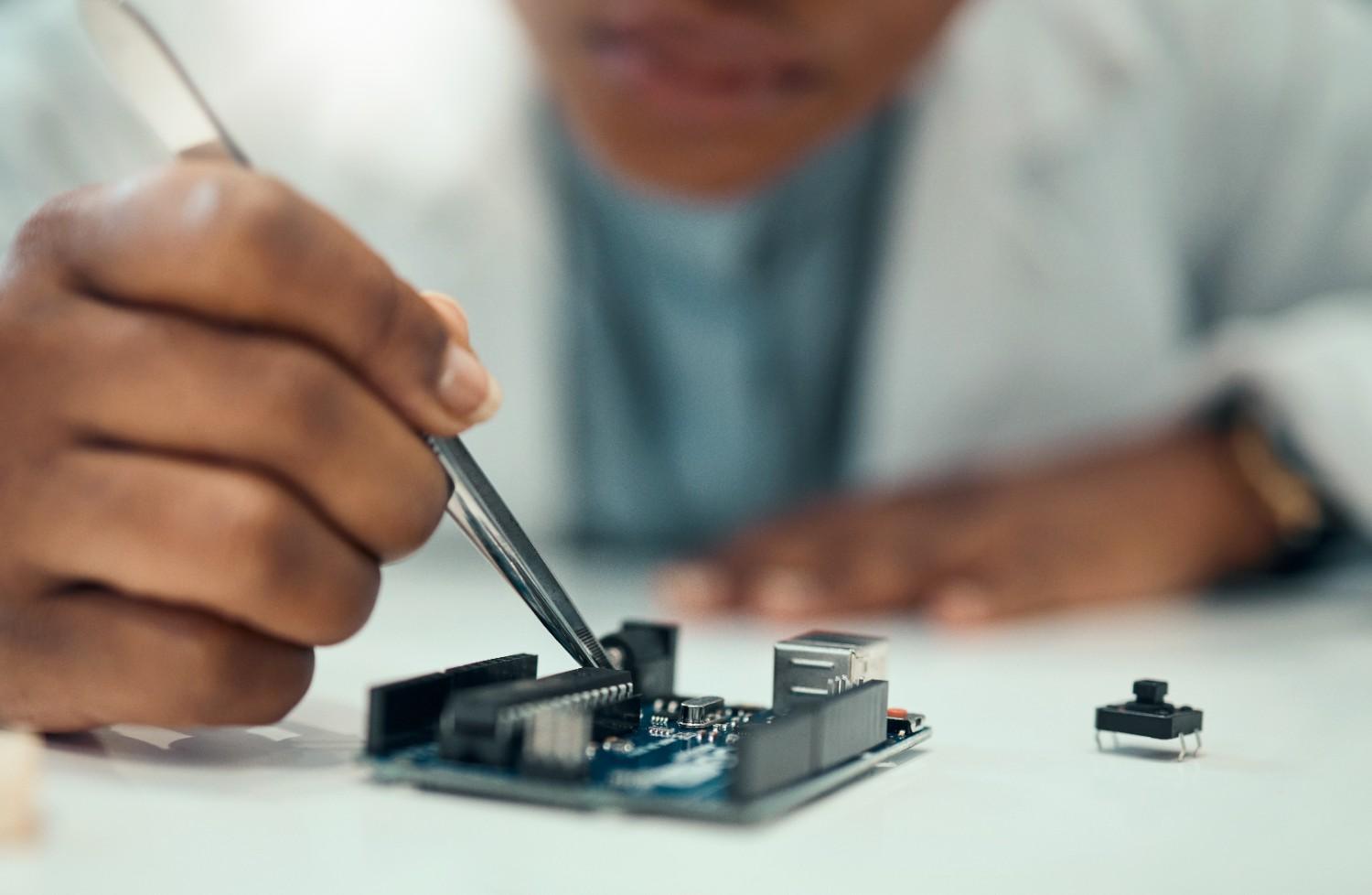
- There are several educational pathways to becoming an IC Design Engineer in Malaysia. Students can pursue degrees in Electrical and Electronic Engineering, Microelectronics or Computer Engineering after completing STPM, Matriculation, A-Levels, Foundation or a relevant diploma. Mathematics, Additional Mathematics and Physics provide important foundations.
- IC Design Engineering requires practical skills beyond academic qualifications. Students should develop knowledge of digital circuits, Verilog, SystemVerilog, circuit simulation and electronic design tools. Building a technical portfolio through projects and internships can help demonstrate their abilities to potential employers.
- Malaysia offers specialised training opportunities for aspiring IC Design Engineers. Industry-linked initiatives such as ASEM's National Semiconductor Excellence Programme (NSEP) and CREST's Engineering Talent for Semiconductor Industry (ETSI) programme provide pathways to develop technical expertise and gain industry exposure.
- IC Design Engineering offers competitive salaries and opportunities for career progression. Fresh engineering graduates at Selangor's IC Design Park were offered RM5,000–RM6,000 monthly in a published recruitment benchmark, while experienced IC design and R&D specialists can earn RM8,000–RM25,000. Engineers can progress into senior technical, chip architecture or engineering management roles.
Ever wondered who designs the tiny chips powering your smartphone, laptop or gaming console? Behind every one of those chips is a team of engineers figuring out how millions, sometimes billions, of tiny electronic components should work together.
They're called IC design engineers, and Malaysia is growing its own chip design industry.
To become one, you'll typically need a degree in Electrical and Electronic Engineering, Microelectronics or Computer Engineering. But getting hired takes more than passing exams. You'll also need to prove that you can design, simulate and troubleshoot electronic circuits.
Here's what you should know before choosing this career.
What SPM and Pre-University Subjects Do You Need?
If you're still in secondary school, Mathematics, Additional Mathematics and Physics should be your priorities.
Additional Mathematics helps you understand the calculations behind electronic circuits, while Physics explains how electricity behaves.
Chemistry and Computer Science are useful too, particularly if you're interested in semiconductor materials or programming.
After SPM, you can pursue STPM, Matriculation, A-Levels, Foundation in Engineering or a relevant diploma.
Remember, these are recommended pathways. Actual entry requirements vary between programmes.
What Degree Should You Study to Become an IC Design Engineer?
You don't necessarily need a degree with the words IC Design in its title.
Several engineering courses can prepare you for the industry.
Engineering degree | What you'll learn |
Electronic circuits, digital systems and circuit design | |
Microelectronics | Semiconductor devices, integrated circuits and chip technology |
Computer hardware, digital electronics and programming |
Here's something important: look beyond the course name.
Check whether the degree includes subjects such as Very Large Scale Integration (VLSI), semiconductor devices and digital circuit design. These are directly relevant to chip development.
If you intend to register as a Graduate Engineer, check the programme's EAC accreditation too.
What Technical Skills Do IC Design Engineers Need?
Think of IC design as building something incredibly complicated, except you do most of the work on a computer before a physical chip exists.
Engineers use specialised software to design circuits, predict how they'll behave and catch mistakes before manufacturing.
Skill | What it's used for | Where to practise |
Digital logic | Understanding how circuits process information | Digital circuit exercises |
Verilog / SystemVerilog | Describing and testing digital hardware | |
SPICE simulation | Testing analogue circuits virtually | |
Physical layout | Arranging circuits on a chip | |
Python / Tcl | Automating repetitive design tasks | Programming projects |
Don't worry if these names sound unfamiliar. You aren't expected to master everything before university.
Start with the fundamentals and develop the tools relevant to your chosen specialisation.
How Can You Build an IC Design Portfolio Before Graduating?
Imagine two graduates applying for the same IC design job. Both have engineering degrees, but one can show a working circuit they've designed and tested.
That practical experience could make a difference.
You don't need an expensive laboratory to get started.
If you enjoy digital design, try creating a simple calculator or a communication circuit using Verilog.
More interested in analogue electronics? Simulate an amplifier and see how changing its components affects performance.
Free tools such as EDA Playground, ngspice and OpenROAD can help you practise.
Save your designs, simulation results and explanations of what went wrong and how you fixed it. That's the beginning of a technical portfolio.
Are There Sponsored IC Design Training Programmes in Malaysia?
Here's some encouraging news: you don't have to figure out everything on your own.
Malaysia has industry-linked programmes designed to help graduates develop specialised chip design skills.
The Advanced Semiconductor Academy of Malaysia (ASEM) runs the National Semiconductor Excellence Programme (NSEP), combining classroom learning with practical industry training.
Its September–December 2026 intake offered sponsored training, although participants were subject to a RM200 registration fee and an RM800 refundable commitment deposit. Future intakes may have different terms.
Meanwhile, CREST's Engineering Talent for Semiconductor Industry (ETSI) supports training and industry experience in semiconductor-related fields.
Check their official pages for eligibility and future applications.
Should You Specialise in Analogue, Digital or Physical IC Design?
Not every IC design engineer works on the same part of a chip.
Some develop its electronic functions, while others check for errors or figure out how everything fits into a tiny physical space.
Specialisation | What you'll work on |
Digital IC Design | Logic circuits used in processors and controllers |
Analogue IC Design | Amplifiers, power management and signal circuits |
Physical Design | Turning digital designs into chip layouts |
Analogue / Custom Layout | Detailed layouts of analogue circuits |
Design Verification | Finding design errors before manufacturing |
Design-for-Test (DFT) | Making completed chips easier to test |
Firmware / Embedded Systems | Software that communicates with hardware |
Love coding and solving logic puzzles? Digital design or verification might appeal to you.
Prefer understanding how electronic circuits behave? Analogue design could be more interesting.
You can explore these areas through university projects and internships before deciding.
How Much Do IC Design Engineers Earn in Malaysia?
IC design can be financially rewarding, especially as engineers develop specialised expertise.
However, not every IC designer earns the same salary.
Career benchmark | Monthly salary |
Fresh engineering graduates at Selangor's IC Design Park | RM5,000–RM6,000 |
Experienced IC design and R&D specialists | RM8,000–RM25,000 |
These are specific industry benchmarks, not nationwide averages or guaranteed salaries.
Your earnings depend on your specialisation, employer and experience.
What Does Career Progression Look Like for an IC Design Engineer?
Your first job probably won't involve designing an entire chip independently.
Junior engineers typically support experienced teams with circuit development, simulations, testing or layout work.
As you gain experience, you'll handle more complicated designs and take greater responsibility.
A possible career path looks like this:
Graduate Engineer → IC Design Engineer → Senior Engineer → Principal Engineer → IC Architect or Engineering Manager
Some engineers become technical specialists, while others move into leading teams.
And here's the interesting part: the chips you work on could eventually power devices used by millions of people.
So if you enjoy electronics, solving difficult problems and understanding how technology works, IC design could be a career worth exploring.
Frequently Asked Questions
1. How Long Does It Take to Become an IC Design Engineer in Malaysia?
A common pathway takes approximately five to six years after SPM, including pre-university studies and a relevant engineering degree. Diploma routes and additional training may affect the duration.
2. Is Additional Mathematics Compulsory for IC Design Engineering?
Additional Mathematics is strongly recommended because engineering involves mathematical calculations. However, admission requirements vary between institutions and programmes.
3. Can Computer Science Graduates Become IC Design Engineers?
Yes, particularly in selected design verification and automation roles. However, you may need additional knowledge of electronics, digital hardware and circuit design.
4. Do IC Design Engineers Need to Know Coding?
Yes, particularly in digital design and verification. Engineers use Verilog or SystemVerilog to describe and test electronic hardware. Python and Tcl are also useful for automation.
5. Are There Free or Sponsored IC Design Courses in Malaysia?
Yes. Programmes such as ASEM's NSEP offer sponsored training opportunities. However, registration fees, refundable deposits and eligibility conditions may apply.
6. Do You Need an FPGA Board to Learn Digital IC Design?
No. You can begin designing and simulating digital circuits using tools such as EDA Playground and Icarus Verilog without buying an FPGA board.
7. Is a Master's Degree Required to Become an IC Design Engineer?
Not usually. Many graduate positions accept a relevant bachelor's degree. A master's degree may help if you want to pursue advanced research or specialised technical roles.
8. Can Malaysian IC Design Engineers Work Overseas?
Yes. IC design skills are relevant to semiconductor companies worldwide. However, overseas employment depends on your expertise, experience and the employer's requirements.


Students
© 2009 - 2026 TIMES MEDIA SDN. BHD. (955976-P). All Rights Reserved.