The Sketch of a Young Architect’s Journey

Dini Qistina Rashid
January 2, 2026
The article profiles Muhammad Izz Israq, a Malaysian architect who uses his education and early career to discuss how Malaysia’s architecture reflects cultural influence, regulation, and changing design tools.

Your interests can shape your career path. Israq transitioned from dreaming of a career in medicine to architecture because he loved drawing, crafting, and even designing houses in Minecraft.
Architecture is passion plus discipline. You need creativity, but you also must follow building laws, technical standards, and real-world constraints.
Growth comes from feedback and constant learning. Criticism is part of the job, and technology is raising expectations, so you need to continually upgrade your skills.
Malaysia, with its diverse identities and cultures, is reflected in its colourful architectural canvas. Stretches of houses, schools, mosques, temples, and parks decorate the Malaysian landscape, making it a vibrant land for everyone to call home. In its vibrance lies the intricacy of both historical and modern architecture, all influenced by various cultural traditions, colonial legacies, and contemporary design trends. This harmonious fusion is what reflects Malaysia’s forward-thinking and inclusive architectural landscape.
Ranging from tropical modernism to experimental urban forms like Petaling Jaya and Shah Alam, respectively, Malaysia’s built environment is shaped by architects whose vision overflows with creativity and practicality. With such diverse communities inspiring the uniqueness of Malaysia’s architectural landscape, it is worth examining the brilliant minds that contribute to this thriving architectural revolution. Among them is Muhammad Izz Israq, a young architect whose journey in architecture reveals how he proudly uses his humble brush on the masterpiece that is the Malaysian skyline.
When Play Turned into Blueprint
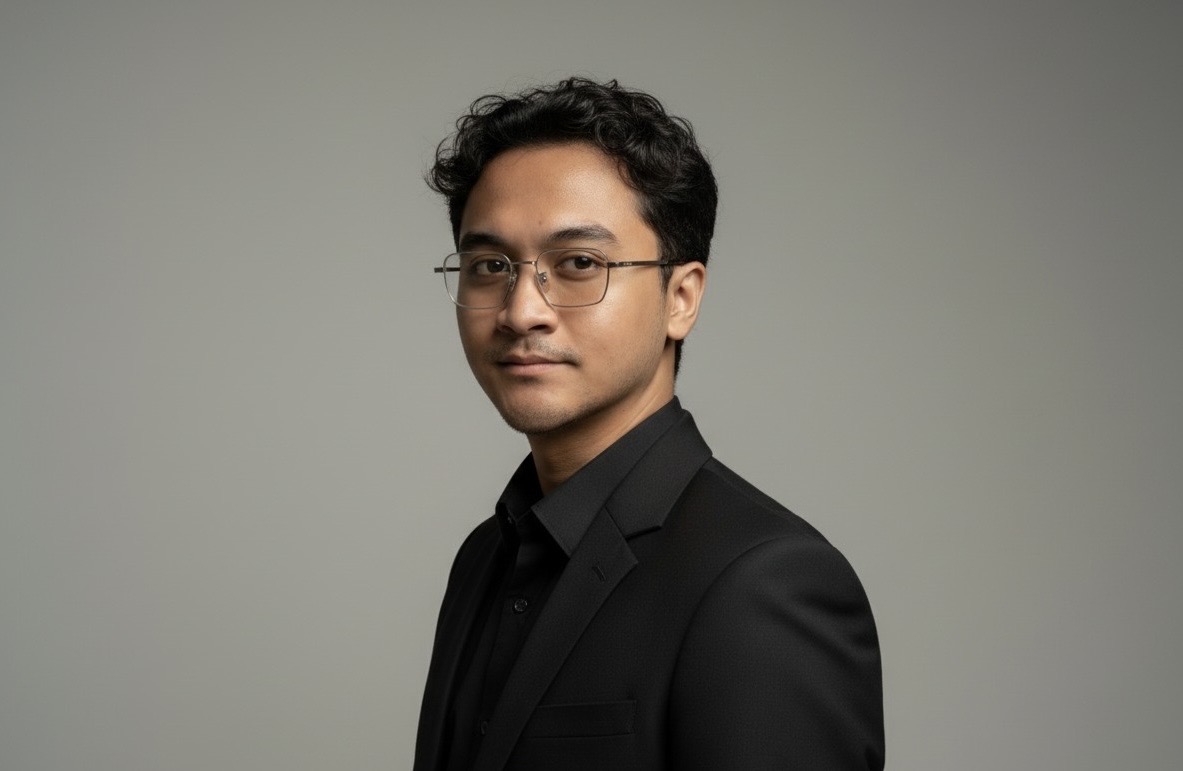
Muhammad Izz Israq works as a Project Architect at CHY Architects Sdn Bhd. His academic journey began at Universiti Islam Antarabangsa (UIA), where he completed his Bachelor of Science in Architecture. He later pursued a Master of Architecture at Universiti Sains Malaysia (USM) in Building and Planning. Today, he stands at the intersection of education and professional practice, navigating the realities of architectural work while holding onto the curiosity that first drew him into the field.
Interestingly, architecture was never a part of his childhood plan. Like many students, he imagined himself in more conventional professions. “I’d always dreamt of becoming a surgeon or a mathematician,” he shares earnestly. This sense of uncertainty is rather common amongst high school leavers; how is one to decide, at a very young age, what they should pursue for the rest of their lives? It’s a complex subject matter, but for Israq, the answer came naturally as a reflection of his hobbies and interests.
Sports, drawing, crafting, and creative play were what Israq loved to fill his time with. Anything involving the arts was a great source of fulfilment for him, whether on paper or online. He recalls spending hours on Minecraft, not merely building structures but also studying modern house designs on YouTube and, in turn, recreating them block by block in the game. What started as play then became the foundation for spatial thinking, proportion, and design logic.
Slowly but surely, these virtual experiments eventually manifested into a clear career path. Israq began translating his ideas into sketchbooks and architectural software, in awe of the many buildings he could one day bring to fruition.
The process never felt forced, but rather a natural drive that gave him fulfilment. This fulfilment was what steered Israq towards architecture. The decision became clearer after a conversation with his father, whom he describes as his role model. With his father’s encouragement and belief that architecture suited his strengths more than medicine, Israq finally decided that architecture would be his life’s work. This unwavering support and guidance from his father were what carried him through years of intense study.
Now, he proudly steps into the profession, turning years of exploration into tangible architectural work.
Studio Nights and Real-World Rules
Architecture education is demanding, both mentally and physically; long studio hours, constant critiques, and meticulous designing can sometimes feel like hurdles to some. Yet, Israq credits his internal drive, combined with external support, for sustaining him. He explains that his burning passion drives him to explore new paths, which helps him grow.
Still, he does not romanticise independence. He acknowledges the role of his parents with gratitude: “Of course, the person who always keeps me going with countless amounts of prayers is my parents. I’m very grateful as they both support my journey up until now, and happy to see the person I turned out to be.”
One of the most defining experiences in his academic life was his thesis project, which he describes as his favourite work to date. It was a transportation hub on Penang Island called PULSE, which stands for Penang Urban Link and Station Exchange. The concept addressed urban mobility while integrating multiple functions into a single structure.
Unlike shorter studio projects, the thesis spanned an entire year. And undoubtedly, this big project demanded a consistently sustained focus and resilience. Throughout the project, it was a whole lot of back-and-forth with his lecturers, enriching discussions with classmates, and sleepless nights. To describe it as exhausting would be an understatement.
One of the biggest challenges Israq faced was balancing personal design intentions with real-world constraints. Designing for personal satisfaction alone was not enough; he had to comply with building laws, structural standards, and planning requirements. There were too many things to consider and balance, and it overwhelmed him to an unimaginable extent.
Another challenge lay in programme complexity. The building had to combine three typologies on a single site: accommodation, transportation, and commercial spaces. Each typology came with its own technical and spatial demands. Integrating them into one coherent structure required careful planning, iteration, and compromise. Through months of guidance from lecturers, friends, family, and relevant authorities, the project matured. Despite the stress, his relationship with design remains deeply personal. He believes that architects must care about their work beyond grades or approval. Israq proudly admits that he loves all his design projects because, as he puts it, “It is crucial for us to love our designs in the end. That’s why we need to design according to our satisfaction.” In short, as long as you’re not satisfied with your final product, then it shouldn’t be the final product.
Like many architects, Israq has faced challenges beyond design complexity. Architecture requires patience. Progress can feel slow, especially when designs undergo multiple revisions or are constrained by budget and regulatory constraints. Criticism feels never-ending, regardless of whether it comes from lecturers, clients, consultants, or authorities. But rather than taking it to heart, he learned to reframe criticism as a tool for growth, for it was essential to survive in the field.
Designing Tomorrow, Starting Today
Israq has big dreams about his future in architecture.
He, of course, hopes to one day obtain his professional certification and establish his own firm with a dedicated team. This dream of his he holds dearly, a daily reminder to keep going despite the obstacles that may befall him.
At the same time, though, he expresses a broader hope for the country’s architectural culture. While Malaysia is home to a variety of architectural styles, he wants Malaysia to be more open to intricate and expressive building designs. Instead of repetitive solutions and minimalist modern architecture, he aspires to witness Malaysia’s architectural landscape shift into a bolder, more sophisticated cityscape like Seoul or Dubai.
Israq believes that, to accomplish this, technology must break through barriers and evolve into greater greatness. Contemporary architecture differs significantly from what it was decades ago. Digital tools have transformed how architects design, visualise, and communicate. Software enables rapid iteration, simulation, and collaboration across disciplines. Parametric design and environmental analysis tools enable architects to respond more intelligently to climate and context. Thus, the collective that drives Malaysia’s architecture must be well-versed in these technologies to take things up a notch, so that one day, Israq’s dreams of seeing Malaysian architecture progress–which he shares with many other architects–will one day materialise.
However, while technology is booming, it simultaneously raises expectations. To substantiate this, clients expect faster turnaround times and higher precision. Therefore, architects must continuously update their skills to stay on track.
When asked what advice Israq would give to students considering architecture, Israq speaks with honesty and warmth but does not sugar-coat the difficulty of the course: “My advice in this journey is, yes, architecture is one of the toughest courses you can think of. But everything in life is tough if you don’t have a passion for it.” Passion, in his view, is the difference between endurance and burnout. If students genuinely want to see their designs come to life, the hardships won’t feel like hardships at all, but rather a learning tool.
He also addresses the emotional challenge of criticism. “Don’t let people’s words or intentions bring you down,” he says, reminding students that no design is ever beyond critique. Instead of fearing feedback, he encourages students to embrace it because it’s impossible to create something flawless from the get-go.
But the most important advice from Israq would be to enjoy the privilege of pursuing something you are wholeheartedly passionate about. Having fun in the process absolutely matters because satisfaction with the final design is closely tied to how the journey felt. He urges students to push beyond their comfort zones, make mistakes, and learn from them. Growth, he believes, is what remains long after the drawings are done and the models are packed away.
Got questions? Click here to chat with one of our counsellors on WhatsApp and get tailored advice!


Students
© 2009 - 2026 TIMES MEDIA SDN. BHD. (955976-P). All Rights Reserved.